Picture a patient with several chronic conditions and no reliable ride to the clinic. Her provider has a program built for her: a care team that checks in between visits, directs her to local resources like rides, and catches trouble early. She is eligible today.
But she'll only hear about it months from now. She's one name in a growing enrollment backlog as our population ages and more qualified patients are added.
Without access to concierge medicine to get care right away, these patients with socioeconomic barriers and multiple chronic conditions are the ones stuck in line.
Enrollment or intake is a conversation. Someone has to call each patient, explain the program, answer questions, and get consent. Operators hire people to do that, and reach is capped by the staff they can hire, train, and keep.
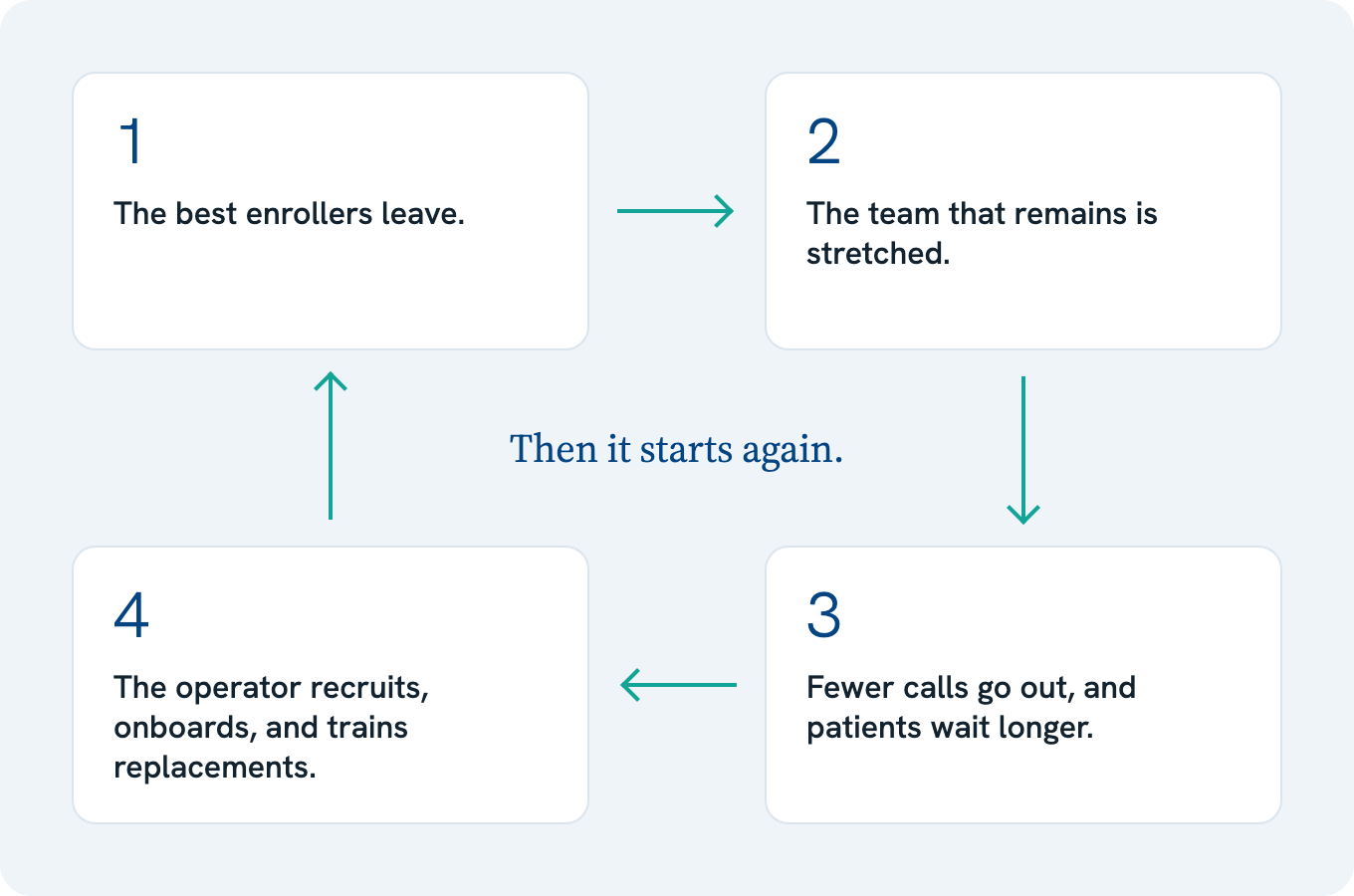
That is where it breaks:
Then it starts again. Meanwhile referrals keep arriving, and the backlog grows.
CircleLink Health has run care management programs for more than ten years. For all of them, enrollment was a key constraint. We recruited, onboarded, oriented, and replaced, and patients still waited.
Eighteen months ago we stopped trying to out-hire the problem and started building.
SphereEnroll is an AI enrollment and intake agent. It calls each referred or eligible patient on behalf of their own provider or health plan, explains the program, answers questions truthfully, captures consent, and books the first care touchpoint before the call ends.
Some programs need intake rather than enrollment on the call. In GUIDE (Medicare's dementia care program), a human clinician must do the enrollment. There the agent completes the intake steps, then books the enrollment call on that clinician's calendar, live, before the patient hangs up.
It says what compliance requires on every call. It never misses a shift. It calls 10 patients or 100,000 with no added headcount, starting at the point of referral.
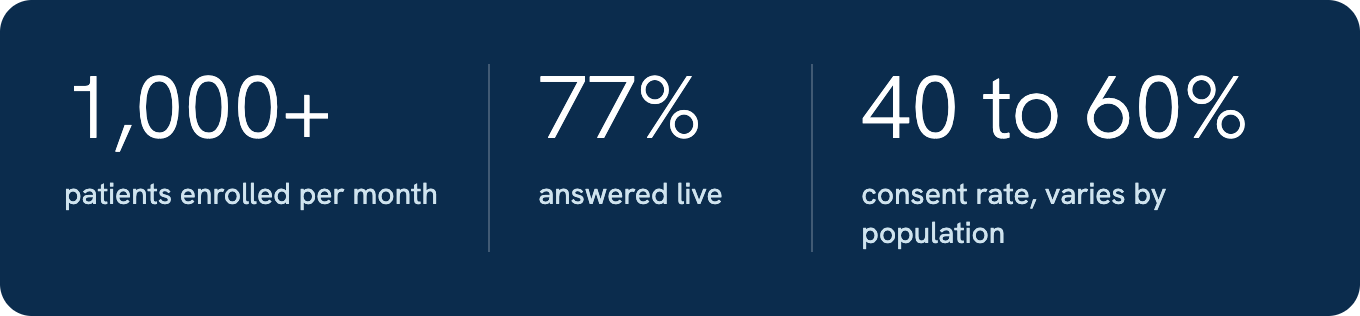
Today it enrolls more than 1,000 patients a month. Over the last twelve months, 77% of the patients it dialed answered live, and 40 to 60% of patients consent, depending on the population. For context, the median practice billing Medicare for chronic care management reached 14.7% of its eligible patients (Agarwal et al., JAMA 2018, 2016 data).
For the patient, the change is simple. Care starts in days, not months.
Then competitors and partners started calling us. They had the same backlog and wanted the same fix.
That forced a question about our mission. We exist to accelerate and enable preventive care, and enrollment is where preventive care starts. A patient waiting in another company's backlog is still a patient waiting, and keeping SphereEnroll to ourselves would only speed up care for our own.

So SphereEnroll is now a standalone product for the whole care management industry. It works across CCM, RPM, and GUIDE today. More applications, including clinical trial enrollment, are coming.
Go back to the patient at the start. This time her phone rings the day she is referred, and the call opens with a name she trusts. A few minutes later she is enrolled, and her first care touchpoint is on the calendar. Fast forward and she's connected with a tele-RN, vitals monitoring and a ride to the clinic, leading to improved health and avoided hospitalizations.
That is preventive care, accelerated, and we want it for every eligible patient, whoever runs their program. If enrollment is the bottleneck in yours, see how SphereEnroll works.