
New data shows care management program significantly improves diabetic care quality metricsIn a major win for chronic disease management, new data from a rural Colorado primary care group practice shows that CircleLink Health’s RN Chronic Care Management (CCM) program significantly outperforms standard care on a critical diabetes quality measure: CMS122v11 – Hemoglobin A1c Poor Control (>9%).
For calendar year 2024, in the clinic’s standard care population, 21.5% of diabetic patients had A1C values either above 9% or were untested. In contrast, among diabetic patients enrolled in CircleLink’s CCM program, only 10.7% had A1C >9% or untested.
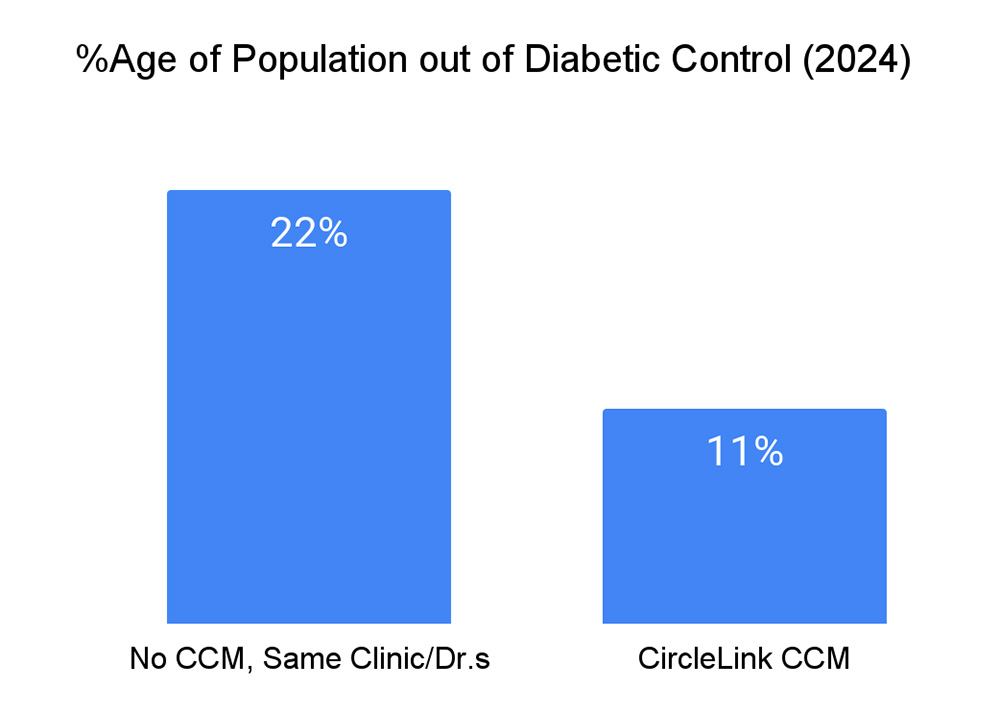
This represents a 50% relative improvement in A1C control. The difference is statistically significant (p = 0.014), highlighting the effectiveness of CircleLink’s remote nurse-led care in closing one of the most important gaps in chronic condition management.
This success echoes findings from other CircleLink partners. At a large group practice, a full claims data study showed a ~30% reduction in overall total cost of care for patients participating in CircleLink’s CCM program vs. control—demonstrating that quality care improvements can go hand-in-hand with substantial cost savings.
CMS and commercial payers increasingly tie reimbursement to quality measures like CMS122v11. Yet many primary care clinics—particularly those in rural or resource-constrained settings—struggle to consistently engage patients and close chronic care gaps.CircleLink Health addresses this by using telephonic registered nurses who work directly with patients between office visits to improve care plan adherence, lifestyle choices, and follow-up care—ensuring labs like A1C are completed and brought into control.
From meaningful A1C improvements in rural Colorado to reduced costs in Ohio, Chronic Care Management is demonstrating scalable, measurable outcomes in primary care. As payors demand more and more from primary care and specialists, CircleLink is a clinically proven partner to help meet today’s value-based care challenges.